Contact Us

Use the form on the right to contact us.

You can edit the text in this area, and change where the contact form on the right submits to, by entering edit mode using the modes on the bottom right. 


123 Street Avenue, City Town, 99999

(123) 555-6789

email@address.com


You can set your address, phone number, email and site description in the settings tab.
Link to read me page with more information.

chris-lee-654655-unsplash.jpg

Elements

THINGS THAT GO “BUMP!” IN THE NIGHT

Janine Mendes-Franco

We all get them — common skin injuries like cuts, bumps and bruises that put their stamp on our skin — and while they are usually not serious, they can be unsightly and uncomfortable. Understanding what happens to your skin when it experiences this type of trauma can help you minimise and manage the damage.

The science behind bumps and bruises

Any type of blunt trauma to the skin naturally affects the underlying blood vessels. Swelling underneath the skin causes it to stretch. This can result in immediate redness, and perhaps even minor bleeding beneath the skin's surface.

Bumps are formed when ruptured blood vessels release blood into the surrounding tissue. Bruises happen when the capillaries break and blood leaks into the surrounding tissue, with the area turning purple thanks to the effect of oxygen-rich haemoglobin in the blood. As the body's natural healing process begins, the bruise will change colour transitioning from red to purple, then green to yellow, and eventually fading away.

Depending on the nature of the injury and the level of resilience in the skin, some people may experience an eczema-type rash that becomes bumpy or itchy, caused by the presence of the fluid under the skin.

How to help your skin bounce back

Ice, ice baby — Ice the area for about 15-20 minutes to reduce swelling and pain, but be sure to take breaks to avoid damage from frostbite.

Don’t wait to elevate Prop up the affected area on a pillow to reduce swelling.

Go over the counter — Non-prescription pain relievers that contain ibuprofen or acetaminophen can help ease pain and reduce inflammation, while topical creams containing arnica or vitamin K can help reduce bruising and promote healing. Be sure to follow the recommended dosages and instructions.

Bless the compress — Compression garments and bandages help reduce swelling and provide support for blows to the limbs. They also provide some measure of protection and prevent worsening of the injury.

Do it with diet — Proper hydration and a diet rich in vitamins C and K (think fruits, veggies, leafy greens and heart healthy oils) can promote faster healing of damaged blood vessels and skin tissue.

Above all, be patient. In most cases, bumps and bruises heal on their own, but may take anywhere from a few days to a couple of weeks.

THE NITTY GRITTY OF UV NAIL DRYERS

Janine Mendes-Franco

Things we love about doing our nails: expressing our individuality and style with different colours and cool designs. The thing we hate: drying time. Ultraviolet nail-polish dryers have revolutionised nail care by expediting the drying process of gel and shellac nail polishes. By activating the photo-initiators in these types of polishes, manicures become more chip-resistant and last longer. Win/win, right? It’s not so simple.

Efficient, but controversial

UV nail dryers are super speedy at curing and hardening the polish, resulting in a glossy, gorgeous manicure that can withstand daily wear and tear — but with growing concerns about the dangers of UV exposure, there are alternatives with fewer potential health risks.

We already know that the cumulative effects of UV rays on the skin can accelerate ageing and, in some cases, contribute to skin cancer, which is why we’re forever singing the sunscreen song. If you do decide to use UV nail dryers, treat your hands the same way you would the rest of your body — apply a broad-spectrum sunscreen or wear UV-protective gloves before exposing them to UV rays.

Safer alternatives

LEDs

As awareness of UV radiation's potential risks grows, LED nail lamps have emerged as a safer alternative to traditional UV nail dryers. LEDs use light-emitting diodes to cure nail polish, emitting lower levels of UV radiation compared to UV lamps. They also boast faster curing times and longer lifespans, making them an attractive choice for both professionals and at-home users.

Natural approaches

If you want to avoid UV or LED exposure altogether, air drying — though it takes more time — remains a perfectly fine option for regular nail polish. To speed up the process, you can also use quick-dry drops or sprays, which contain ingredients that help evaporate solvents in the polish, thereby accelerating drying time. You can also go old school and position your nails in front of a good, old-fashioned fan or air conditioning vent.

The bottom line

While UV nail dryers can be utilised with proper safety precautions, those preferring to minimise their UV exposure may opt for the comfort of less high-tech methods. As the beauty industry continues to evolve, it's important for you to have access to key information, advocate for your own health, and make informed choices. Either way, your nails are going to look fabulous!

GUARDIANS OF GORGEOUS NAILS

Janine Mendes-Franco

Not only do nails play an essential role in protecting our fingertips, they go a long way in enhancing our overall appearance. However, they are susceptible to various infections that can cause discomfort, look unpleasant, and affect our daily lives.

Here are a few of the most common nail conditions we treat (and tips on how to avoid them)…

Fungal nail infections

Also called onychomycosis, these types of infections occur when fungi enter the nail bed through tiny cracks or cuts. This often leads to discolouration, thickening, and brittleness of the nails. To avoid fungal infections, make sure you and your nail salon technician practice good hygiene by regularly cleaning equipment and tools, and by properly drying your hands and feet. Choose well-ventilated shoes and avoid walking barefoot in damp public places like locker rooms or swimming pools.

Bacterial nail infections 

These pesky conditions occur when there is injury or trauma to the nail and surrounding skin, allowing bacteria to enter. This is usually followed by swelling, pain, and pus formation. It is critical to treat these symptoms early, so please make an appointment with us the minute you notice a change. Other ways to avoid these types of infections include keeping your nails trimmed, and avoiding biting or picking at cuticles, which can create entry points for bacteria. If you do experience a nail injury, be sure to clean the area thoroughly with an antiseptic, and keep it covered until it can be medically treated.

Paronychia

This infection affects the skin surrounding the nails. It can be either acute (caused by bacteria), or chronic (usually resulting from fungi). One way to help avoid paronychia is to steer clear of excessive exposure to water and harsh chemicals, which can weaken the skin barrier around the nails. Wear protective gloves while doing household chores and moisturise your hands regularly to keep skin hydrated.

Ingrown nails

Ingrown nails occur when the edge of the nail grows into the surrounding skin, causing pain, redness, and infection. This can be avoided by cutting your nails straight across (as opposed to rounded), and not trimming them too short. Ensure, too, that your shoes fit properly and give your toes enough room. If you notice signs of an ingrown nail, please make an appointment with one of our dermatologists so they can address the situation safely.

Contact dermatitis

Contact dermatitis related to nails is often called "nail polish allergy" or "nail product dermatitis”, and happens when the skin around the nails reacts to things like nail polish and polish removers, acrylic nails and gels, and other nail care products. People with the condition usually complain of redness, itching, swelling, blistering, and dryness around the nails. Sometimes, there is even pain and oozing.

If you suspect nail-related contact dermatitis, please give us call. We can do patch testing to identify specific allergens that might be causing the reaction, and pinpoint where the problem lies. In severe cases, we may prescribe topical steroids or oral antihistamines, and you might also have to switch to hypoallergenic or fragrance-free nail products.

By incorporating these simple, yet effective practices into your routine, you can significantly reduce your risk of developing debilitating nail infections.

MORPHEUS8 — THE LASER OF YOUR DREAMS

Janine Mendes-Franco

In Greek mythology, Morpheus is the god of dreams and this laser will make your dreams come true! As the first and only FDA-approved device to deliver fractional coagulation to 8 mm — the deepest level available — it’s pushing the boundaries of what’s possible:

  • Facial epidermal resurfacing and sub-dermal remodelling

  • Full-body fractional remodelling

  • Larger and deeper tissue treatments

  • Safe and minimally invasive, without surgery or downtime

How it works

Diagram via Morpheus8 Workstation Master presentation

Less laser, more microneedling meets radiofrequency, Morpheus8 can tackle a range of skin concerns. Designed for precision, it’s an innovative and effective solution to achieve youthful, radiant skin.

Using fractional technology that delivers radiofrequency energy via an array of thin needles, Morpheus8 delves deeply into the skin’s layers to stimulate collagen production and trigger the skin’s built-in healing response. Its adjustable depth settings and intensity levels make it extremely versatile, enabling customisable treatments for whatever your concern is — wrinkles, acne scars, hyperpigmentation, or sagging/untoned skin.

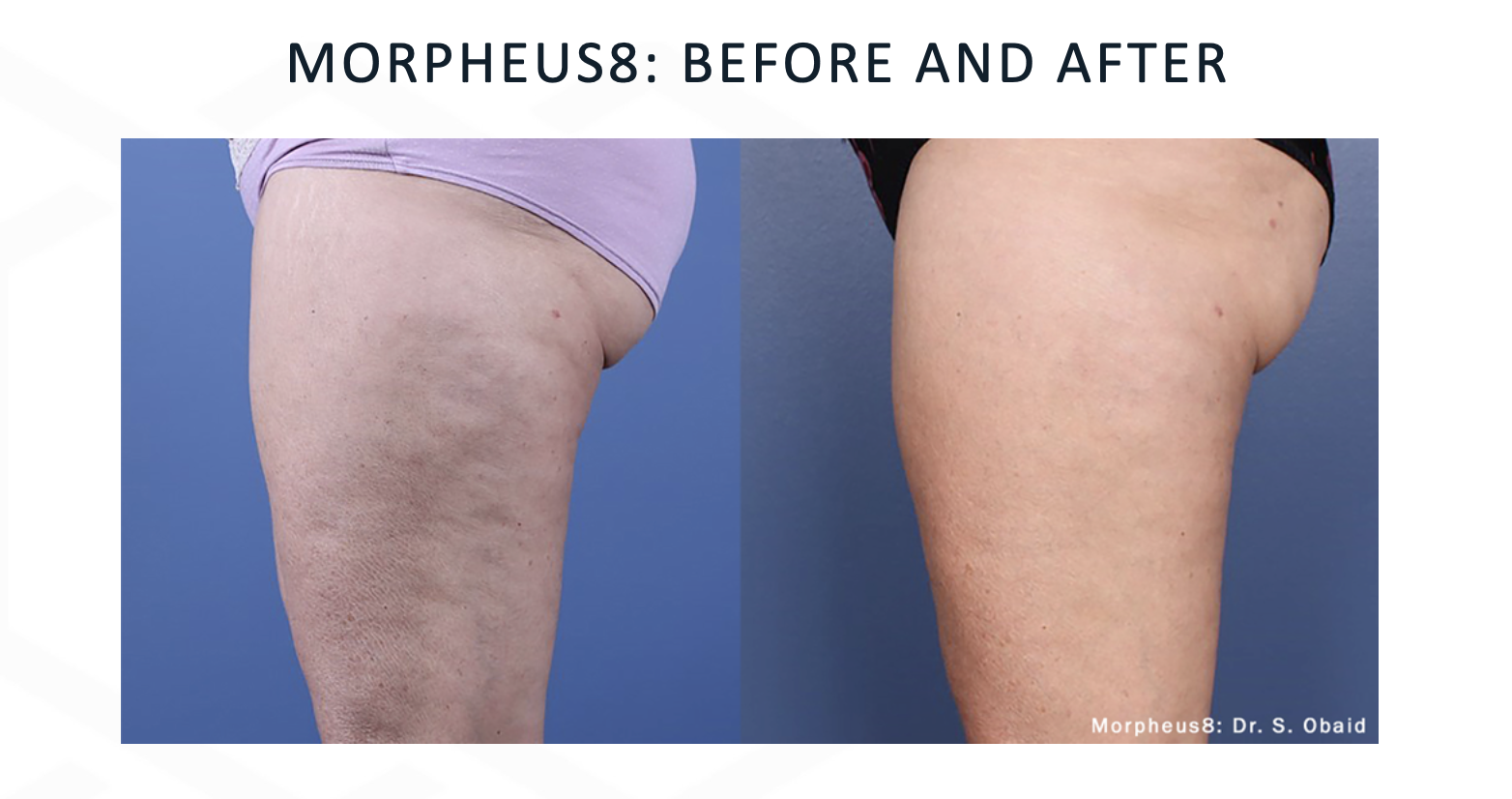
Real results

Image via Morpheus8 Workstation Master presentation

Buy improving skin tone, texture and elasticity, this treatment visibly diminishes the appearance of fine lines, wrinkles and scars, minimises pores, evens out any areas of hyperpigmentation, and basically makes you look and feel younger and more rejuvenated.

Patients often notice results after just one session, with further improvements over time as collagen production is sparked. It’s suited to sin types I-IV, with little risk of post-inflammatory hyperpigmentation.

What to expect

Image via Morpheus8 Workstation Master presentation

We apply a numbing cream to the target area to help assuage potential discomfort, then begin the treatment with the applicator. It’s not particularly relaxing, but the results are well worth it — a visible improvement in the outward signs of ageing, including jowls and general skin laxity.

There will be a short recovery period, and some patients may experience temporary redness, swelling, and pinpoint bleeding, so be sure to follow our post-treatment instructions to ensure proper healing and maximise results.

Undoubtedly a superior laser, the Morpheus8 helps you reach your beauty and body goals safely and more quickly than other treatments. Give us a call to see if it’s the right fit for you.


TURN ON THE RED LIGHT FOR HAIR LOSS

Janine Mendes-Franco

Light therapy has revolutionised skin care. The Celluma RESTORE targets ageing skin and general pain like many other lasers — but its superpower is hair restoration. Safe and non-invasive, it delivers light energy to promote hair regrowth and is effective for a wide range of hair loss conditions.

Who gets hair loss and why?

Hair thinning and loss are more common than you’d think, and can be caused by everything from genetics to stress. Sometimes, inadequate nutrition, hormonal changes, certain medications, or even over-styling can bring on the condition. It affects both men and women, more frequently as they age.

How does hair grow back?

When hair drops, you may think it disappears — but the follicle, which is what keeps the hair attached to the skin, remains. Each of these follicles has a bulb at its base, where hair growth begins. The hair shaft, meanwhile, is made up of the keratin protein. When these areas are working together, hair growth happens. Red light therapy is a good stand-alone option to maximise hair growth; it can also complement existing hair treatments like prescription drugs, PRP, stem cells and transplants.

What Celluma RESTORE does

This LED laser is excellent at reversing hair loss (and preventing further fallout), as well as combating both male and female pattern baldness. It works best for people whose skin types fall between I-IV on the Fitzpatrick scale. It is not recommended for skin types V-VI, those who suffer from androgenetic alopecia, or people who are already experiencing advanced hair loss.

Each treatment takes about half an hour, and requires a 16-week commitment. The laser precisely targets affected areas by stimulating and revitalising dormant hair follicles, increasing blood circulation, and encouraging natural regrowth.

As light therapy technology continues to advance, we have no doubt lasers will continue to lead the way in the fight against hair loss, offering hope and renewed confidence to those afflicted with the condition.