Contact Us

Use the form on the right to contact us.

You can edit the text in this area, and change where the contact form on the right submits to, by entering edit mode using the modes on the bottom right. 


123 Street Avenue, City Town, 99999

(123) 555-6789

email@address.com


You can set your address, phone number, email and site description in the settings tab.
Link to read me page with more information.

chris-lee-654655-unsplash.jpg

Elements

HEALTHY SKIN IS A LIFELONG JOURNEY 

Janine Mendes-Franco

Every time you think you’ve got this skincare thing down, your skin has other ideas—can you relate? Just like you, your skin goes through stages, from youthfulness to adolescence, adulthood to ageing. Two of the most common conditions we see tend to happen at two very different stages of life: puberty and menopause. 

Keratosis pilaris 

Commonly called chicken skin, most people have probably experienced this condition at some point, though it first tends to show up during adolescence. If you notice small, rough bumps on the surface of your skin — almost as if your pores are enlarged and spread over a certain area — you could well be dealing with keratosis pilaris. Eczema sufferers are also prone to developing the condition, which usually appears on the arms, legs and even buttocks, sometimes accompanied by itchiness and skin discolouration.

Caused by a build-up of keratin around hair follicles in the skin, the condition manifests a lot in hotter climates like ours, but mild cases of chicken skin can generally be dealt with via over-the-counter remedies. We like the CeraVe line; their SA Lotion for Rough & Bumpy Skin often does the trick. The brand’s Moisturizing Cream for Psoriasis Treatment can also be quite effective, as it is a lipid-rich product and the key to treating the condition is moisture. Anything harsh or full of fragrance can make the situation worse; proper hydration is essential.  

Menopausal skin 

As if this “change of life” doesn’t come with enough challenges — hot flashes, vaginal dryness, migraines, insomnia — it also takes a toll on your skin. But any woman who has made it as far as menopause isn’t going to go down without a fight! The biggest enemy? Fine lines and wrinkles, thanks to the body’s loss of collagen.

There are things you can do, though, starting with really luxurious moisturisers like SkinCeuticals Triple Lipid, which is a superhero when it comes to refilling cellular lipids and nourishing ageing skin, and Metacell Renewal, which helps improve the outward signs of ageing. The main thing is, you’ve got to keep your skin well hydrated. Retinols also go a long way in strengthening skin’s elasticity.

To find out more about how to deal with any issue your skin surprises you with, give us a call or pop in and visit

SHINING A SPOTLIGHT ON ALOPECIA

Janine Mendes-Franco

If you watched the 94th Academy Awards, there’s undoubtedly a lot to unpack in the moments leading up to the slap heard round the world — but perhaps playing a key role in actor Will Smith’s decision to step onstage was his wife Jada Pinkett-Smith’s reaction to comedian Chris Rock’s joke about her shaved head. 

In 2018, Pinkett-Smith revealed via her Red Table Talk web series that she had been diagnosed with alopecia areata, an autoimmune condition that causes hair loss. When clumps of her hair began falling out in the shower, she called it a “terrifying” experience that had her “literally shaking with fear”. While some people may dismiss the emotion that goes along with getting a diagnosis like alopecia — which is not a life-threatening condition — the fact remains that for both men and women, hair remains intricately linked to self-image, self-expression and identity. 

Photo of Jada Pinkett-Smith (in 2014, prior to her alopecia diagnosis) by Dominick D on Flickr, CC BY-SA 2.0.

Pinkett-Smith explained, “My hair has been a big part of me; taking care of my hair has been a beautiful ritual.” She was also very creative with her hair, playing with shapes, colour and length over the  years, so for her, one of the most difficult aspects of the diagnosis was that her choice as to whether to have hair or not was taken away from her. 

It’s a very real struggle, and one that isn’t talked about enough, so we thought now is as good a time as any to contribute to the conversation… 

Who gets alopecia? 

It’s an equal opportunity condition: anyone can get it, regardless of gender, age or ethnicity, though childhood onset of alopecia often signals more permanent hair loss. Complete hair loss on the scalp is called alopecia totalis; once it affects the entire body, it’s called alopecia universalis, but the latter is quite uncommon. 

If you’re already battling an autoimmune disease like psoriasis or vitiligo, or if the condition runs in your family, you may be at higher risk of getting it, but many people who do not have a family history of alopecia suffer from the condition. Alopecia may also emerge as a side effect of infections, certain diseases (like cancer), or medications. 

How does alopecia typically present itself?

The condition can kill off hair follicles on any part of the body, but people generally find it affects the head and face. There are cases in which hair falls out in patches, but the loss can also be broad. Some people experience breakouts of alopecia from time to time, while others have only one occurrence. The likelihood of regrowth is also impossible to predict, with some patients recovering fully and others not. Like many autoimmune reactions, there is no cure, but there are treatments that offer some hope. 

How do we diagnose it? 

We’ll ask you lots of questions and do a clinical examination that includes taking a look at your nails, since alopecia can make nails brittle, blotchy or even painful. Sometimes, though, additional measures — including blood tests — may be necessary to confirm a diagnosis. 

What can I do to treat it? 

Scientists have suggested a possible link between stress and autoimmune conditions, so maintaining a good work/life balance that allows for self-care may help in keeping such diseases at bay. 

Treatment is not a one-size-fits-all approach. We must custom-design treatments based on your individual experience. For patients dealing with the condition for the first time, sometimes the best approach is to wait and see how it plays out. Depending on your age, as well as the location, type and extent of the hair loss, there’s a possibility that regrowth may happen without intervention. 

For children, however, we may quicker recommend prescription corticosteroids, which can be applied topically in an effort to halt the hair loss. In older patients, these can be administered by injection. 

In cases of rapid and extreme hair loss, we can try topical immunotherapy, which aims to teach your immune system to stop attacking your hair follicles. The American Academy of Dermatology claims that 60-70% patients who undergo this treatment experience hair regrowth. Other medications, like methotrexate and janus kinase (JAK) inhibitors are also available. 

Pinkett-Smith once said she had been trying steroid injections in an attempt to stem the hair loss, but subsequently did an Instagram post in which she said, “At this point, I can only laugh […] Me and this alopecia are going to be friends … period!” Tough as it may be, gracious acceptance can often make all the difference. You may not be able to control what you face in life, but you can control how you respond. 

For many alopecia patients, though, getting to that place is a process. Some prefer to cover their heads with hats, scarves or bandanas until they come to terms with the diagnosis; others opt for wigs or hairpieces, some of which can be custom-fitted. Some people take the bull by the horns and shave their heads, boldly claiming their new reality, however fleeting or permanent it may be. 

Whatever you choose, know this: 

  • We’ll always be honest about your prognosis, educate you about the treatments that are available and suited to your particular situation, and support you through the process

  • How people react to your diagnosis says more about them than it does about you

  • You are worthy, beautiful and strong — with or without your hair

If you suspect you might be experiencing alopecia and need some guidance and  a listening ear, just schedule an appointment with us. 

'C' WHAT WE DID THERE?

Janine Mendes-Franco

Puns aside, topical Vitamin C is Critical (yep, with a capital C) for optimum skin health. That’s because it does for skin all the things that regular Vitamin C does for your body (reducing inflammation, boosting resilience and increasing overall well being) — plus a whole lot more, since ingested Vitamin C generally does not  generally reach the topmost layer of skin.   

Adding this amazing antioxidant to your regular skincare routine can therefore work wonders: 

  • Brightens skin’s appearance, giving it a youthful glow

  • Fortifies skin against sun damage and environmental pollutants

  • Evens out skin tone

  • Reduces hyperpigmentation

  • Minimises the appearance of fine lines, wrinkles and other signs of premature ageing

  • Boosts collagen production and repairs damaged skin

From hydrating skin to improving the look of dark underage circles, these are the four cardinal points of SkinCeuticals’ Vitamin C serums… 

CE Ferulic

This daytime-use Vitamin C serum offers unparalleled environmental protection, improving the appearance of fine lines and wrinkles, boosting skin’s firmness, and brightening your complexion. A superhero in the battle against free radicals (think sun damage and environmental pollutants), it will help keep your skin strong and resilient. 

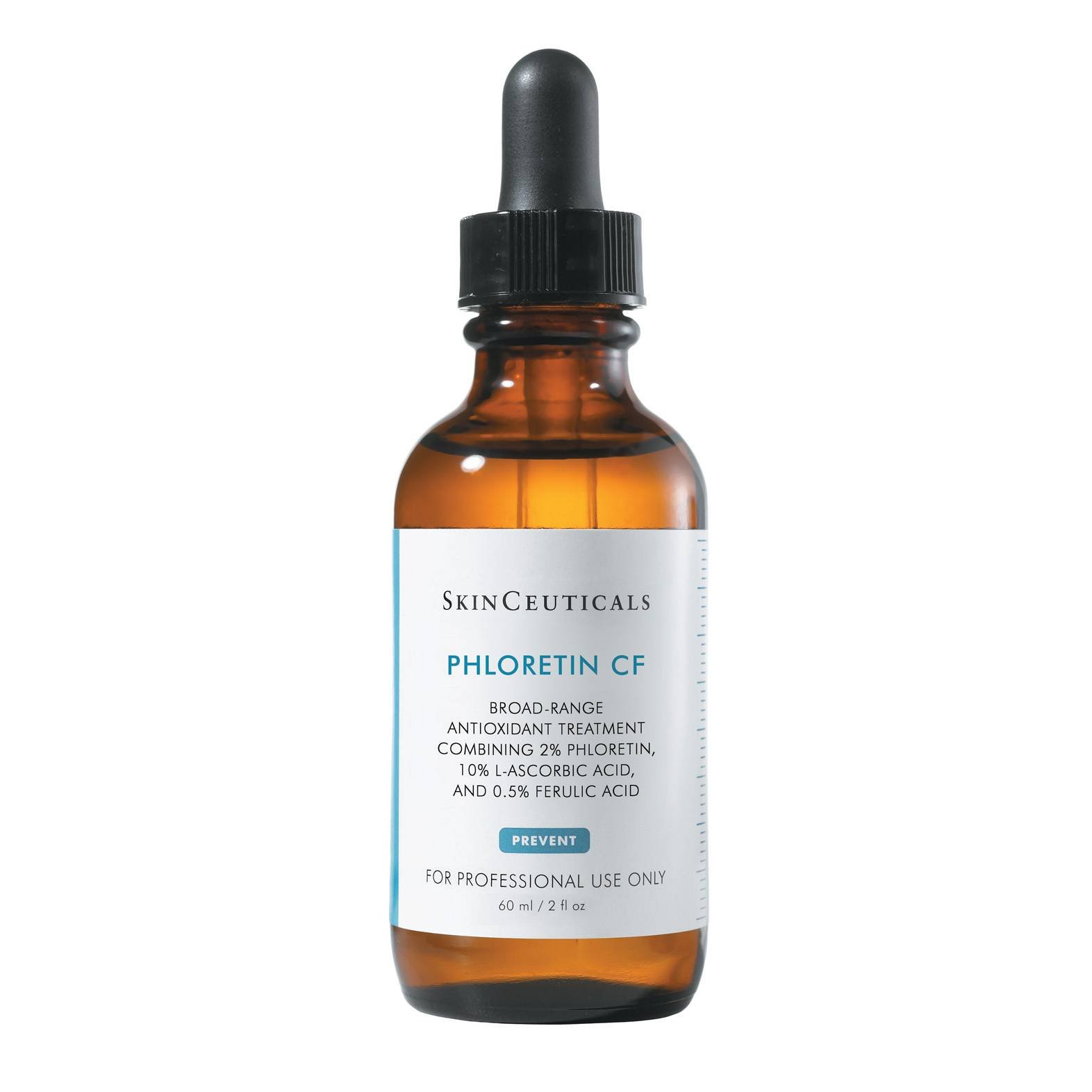
Phloretin CF

Another daytime antioxidant serum that delivers superior environmental protection for your skin, it’s also great at minimising the appearance of wrinkles and instances of skin discolouration, such as hyperpigmentation and age spots. 

Silymarin 

This oil-free serum is a lifesaver for acne-prone, oily or combination skin, improving clarity and refining texture. It also shields against those pesky free radicals. 

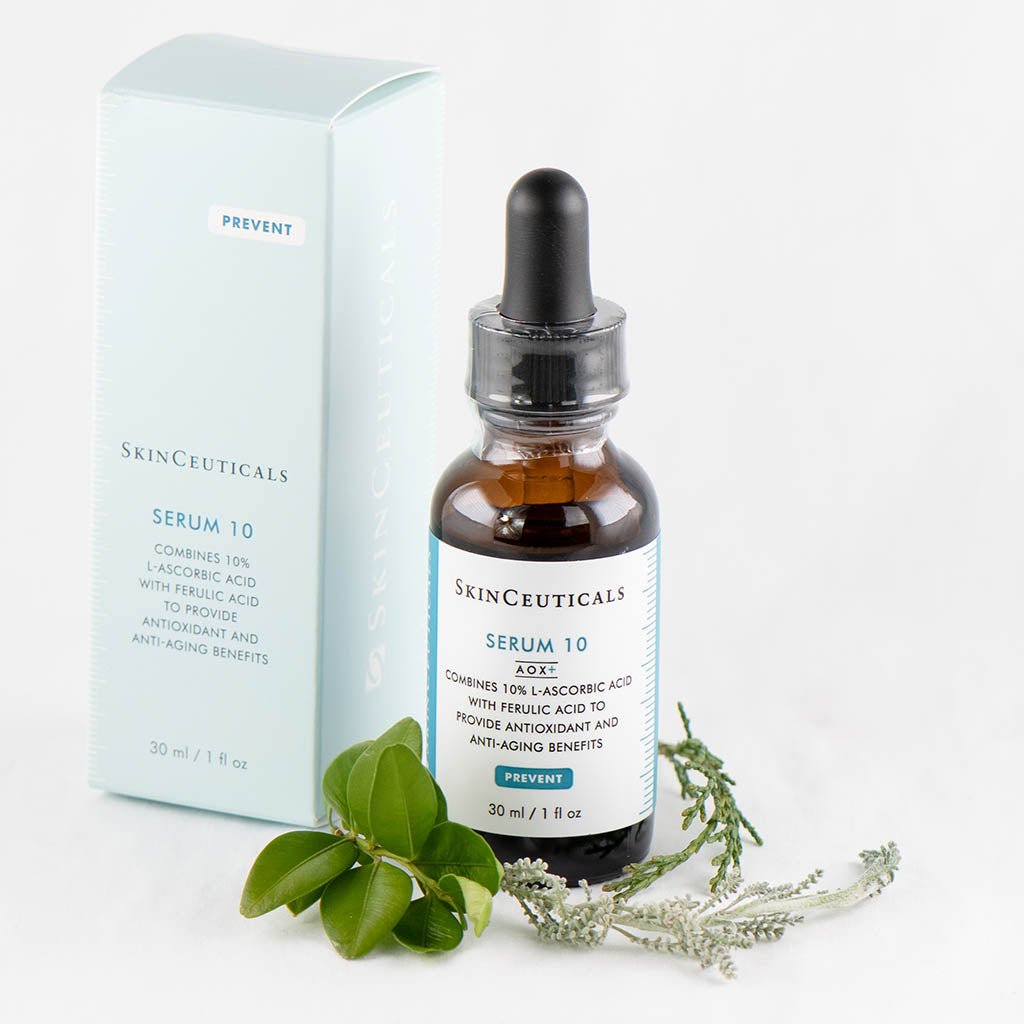
Serum 10

A wonderful choice for sensitive skin, it offers similar benefits of environmental defence and protection against premature ageing. It also works wonderfully well on mature skin, which is often thinner and more delicate. 

Want to find out more or schedule a consultation? Just give us a call — and check out our April specials, where you can get 15% off our Picoway full face pigment treatment with the purchase of any two SkinCeuticals antioxidant products. 

RETINOL TO THE RESCUE

Janine Mendes-Franco

You know how they say the devil is in the details? Sometimes, the littlest things are the ones that make skin appear dull: fine lines, discolouration, brown spots. But fear not! Like your skin’s guardian angel, retinol can swoop in and put things right. This Vitamin A derivative works hard to keep skin healthy by making DNA repair more robust and focusing on rejuvenating skin’s topmost layer, making it look and feel younger. 

If you want to be ahead to the ageing curve, you can start using retinol as early as your 20s and if you think you’re late to the party, rest assured that there are still discernible benefits to be derived — but you’ve got to do it right! 

While there are over the counter configurations, retinol is a very powerful serum and should ideally be used under the supervision of your dermatologist.

Retinol should not be applied in areas where skin tens to be thinner, like around the eyes and mouth.

For example, retinol doesn’t belong anywhere near sensitive areas where skin tens to be thinner, like around the eyes and mouth. It’s best to pair it with a good moisturiser and sunscreen, as retinol can make your skin more sun-sensitive. You also need a concentration that’s right for your skin, so we definitely recommend having a consultation with us in order to be safely guided. Unless used properly and in combination with the right supporting products, retinol can actually be the cause of hyperpigmentation, especially in darker skin tones. 

That said, it’s also quite effective and therefore worth looking into if you want to keep your skin healthy for the long haul. Our SkinCeuticals retinol range comes in three different strengths and is suitable for most types of skin, visibly reversing some of the most common signs of ageing and making skin appear smooth, even, and supple.  

Is retinol right for you? Book a consultation with us and let’s find out! 

TO ALL YOU WONDERFUL WOMEN...

Janine Mendes-Franco

Happy International Women’s Day!

It is difficult to fathom that a year has come and gone since we did our last IWD greeting in March 2021, which highlighted some of Trinidad’s most treasured women. It’s been a tough year to say the least, but therefore even more important to praise the women in our lives — the hardworking mothers, the believers, the researchers, the survivors. When I reflect on what being a physician and mother during the last year of this pandemic has meant to me, the word “empowerment” keeps resonating.

The creator of New York City’s famous “Fearless Girl" statue, artist Kristen Visbal, wanted to "call attention to the glass ceiling in the Wall Street community that so many women have faced. […] for promotion and for equal pay. I wanted her to be, essentially, a teaching tool.” She was meant improve diversity and increase the number of women sitting on corporate boards and she is doing so.

State Street Global Advisors (SSGA), which commissioned the statute, claims that since “Fearless Girl” was installed on March 7, 2017, the firm has identified 1,486 companies without a woman on their board, of which 862 now have a female director. I think this is truly fantastic.

Former first lady of the United States, Michelle Obama, put it perfectly when she said, “For me, being a mother made me a better professional, because coming home every night to my girls reminded me what I was working for. And being a professional made me a better mother, because by pursuing my dreams, I was modeling for my girls how to pursue their dreams.”

Businesswoman Sara Blakely also hit the nail on the head when she spoke out in support of working mothers: “This struggle is real. The juggle is real. That's why everyone should hire working mothers. They are put in crazy situations all the time and are forced to problem-solve. They are some of my most resourceful employees.”

For me personally, I feel that I am teaching my kids a solid work ethic. We truly have to put in the effort and work hard for the things that are important to us in this life.

Tonya with her family

According to actress Angelina Jolie, “If you love what you do […] somehow that drives you forward to enjoy it all. Even the chaos, even the exhaustion of it, and even when it seems out of balance.”

Finally, it’s crucial that as women, we support one another. In the words of another very accomplished woman, Amal Clooney, “choosing to protect and celebrate each other instead of competing or criticizing one another […] is something we can practice every day, no matter where we are and what we do.”